

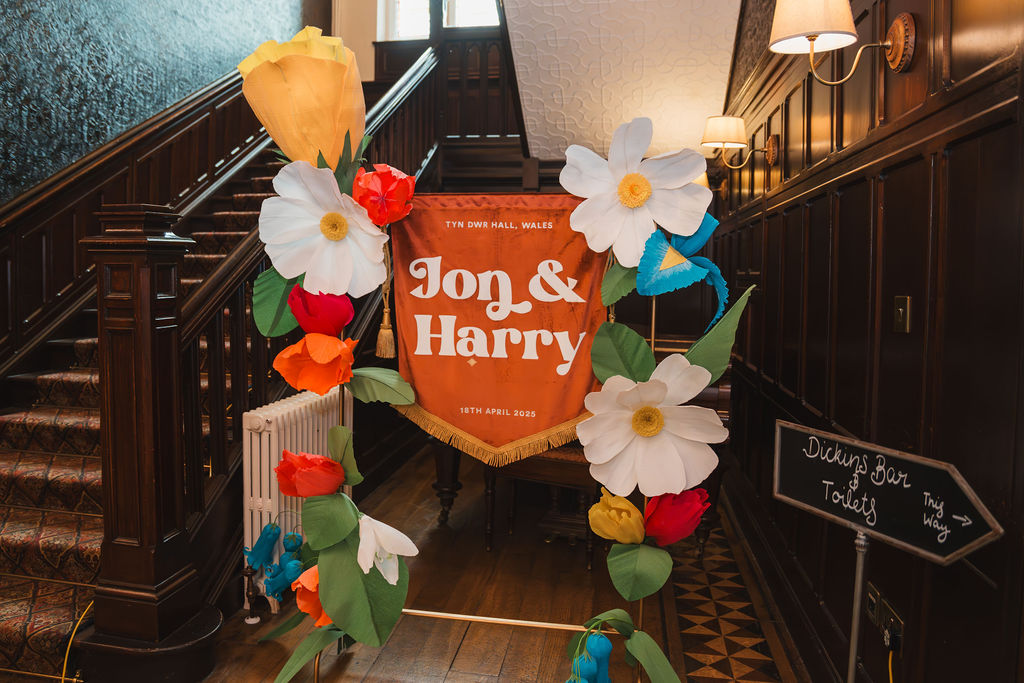
The Power of Flowers
Long before venues, menus and timelines were carefully planned, flowers were used to mark celebrations, express emotion and bring beauty to important moments. Today, they remain one of the most transformative elements of a wedding day.
The right floral choices can soften a space, create atmosphere, guide guests through the venue and even reflect a couple’s personality and style. From dramatic installations to delicate touches, flowers quietly shape the way a wedding feels.
Where flowers can make the biggest impact
When couples first begin thinking about wedding flowers, it’s easy to picture the classic bouquet and perhaps a few table arrangements.
But florals can appear in many different places throughout a wedding day, helping to connect the different moments of the celebration.
Common places couples choose to include flowers include:
The ceremony space
Floral arches, aisle arrangements, meadow-style displays or simple pedestal designs can frame the moment where vows are exchanged. These arrangements often become the visual focal point of the ceremony.
Bouquets and buttonholes
These are the most traditional floral elements, but they still carry huge meaning. The bridal bouquet often becomes one of the most photographed details of the entire day.
Reception tables
Centrepieces help set the tone for the wedding breakfast. Some couples choose elegant, understated arrangements, while others opt for abundant florals that fill the room with colour and texture.
Entrance points and statement pieces
Larger installations at the entrance, staircase, bar or cake table can make a beautiful first impression and help guide guests through the space.
When planned thoughtfully, florals can move with the day — ceremony arrangements can often be repurposed for the reception, helping maximise both impact and value.


Fresh flowers or dried florals?
In recent years, couples have begun exploring alternatives to traditional fresh flowers.
Fresh flowers remain incredibly popular for their scent, texture and natural movement. Seasonal blooms can create soft, romantic arrangements that feel full of life and colour.
Dried flowers, on the other hand, offer a different aesthetic. They can create a more textural, earthy style and have the advantage of lasting long after the wedding day. Many couples appreciate being able to keep arrangements as keepsakes or incorporate them into their home afterwards.
There is no right or wrong choice — the decision often comes down to the style couples love and how they want their flowers to feel within the space.
Considering the environmental impact
As sustainability becomes a bigger part of wedding planning, flowers are an area many couples start to think about more carefully.
Fresh flowers can sometimes travel long distances depending on the blooms chosen, while dried arrangements are often reusable and longer-lasting.
That said, there are many ways couples can make their floral choices more environmentally thoughtful:
-
choosing seasonal flowers
-
working with local florists
-
repurposing ceremony arrangements during the day
-
donating flowers after the wedding to hospitals or care homes
Often, small decisions can make a meaningful difference without compromising the beauty of the arrangements.
More than decoration
While flowers are often seen as decorative, they actually help shape the emotional atmosphere of a wedding.
They soften rooms, add colour and fragrance, and create visual moments that guests remember long after the day itself.
A carefully placed floral arch can frame a ceremony. A simple bouquet can become part of a cherished photograph. A table arrangement can spark conversation among guests who have just met.
In that way, flowers become part of the story of the day.


Finding what feels right
Every couple approaches flowers differently. Some dream of abundant arrangements that fill every corner, while others prefer subtle touches that complement the surroundings.
What matters most is choosing something that feels true to the celebration you want to create.
Because when flowers are chosen thoughtfully, they don’t just decorate a wedding — they help bring it to life.
Sign up for special offers and promotions
The best way to keep in touch with Tyn Dwr Hall is to sign up to our news, offers and events below.